We use cookies and similar technologies to process personal information for the operation of our website, statistical analysis, and providing targeted advertising. We share information about your use of the site with our advertising partners who may further share it with additional parties. You may learn more about how we use cookies here
There are various LCD display technologies on the market, each with its advantages and disadvantages. When a player is engaged in a fast-paced FPS game, such as Valorant, fast response is often the key to winning or losing. A key consideration in ZOWIE’s esports monitor development process is the selection of panel technology that produces a fast response time and minimal ghosting to give players the best gaming experience in tournaments. Even a 1% difference in battle performance can determine the outcome of the game.
What Are the Different Panels?
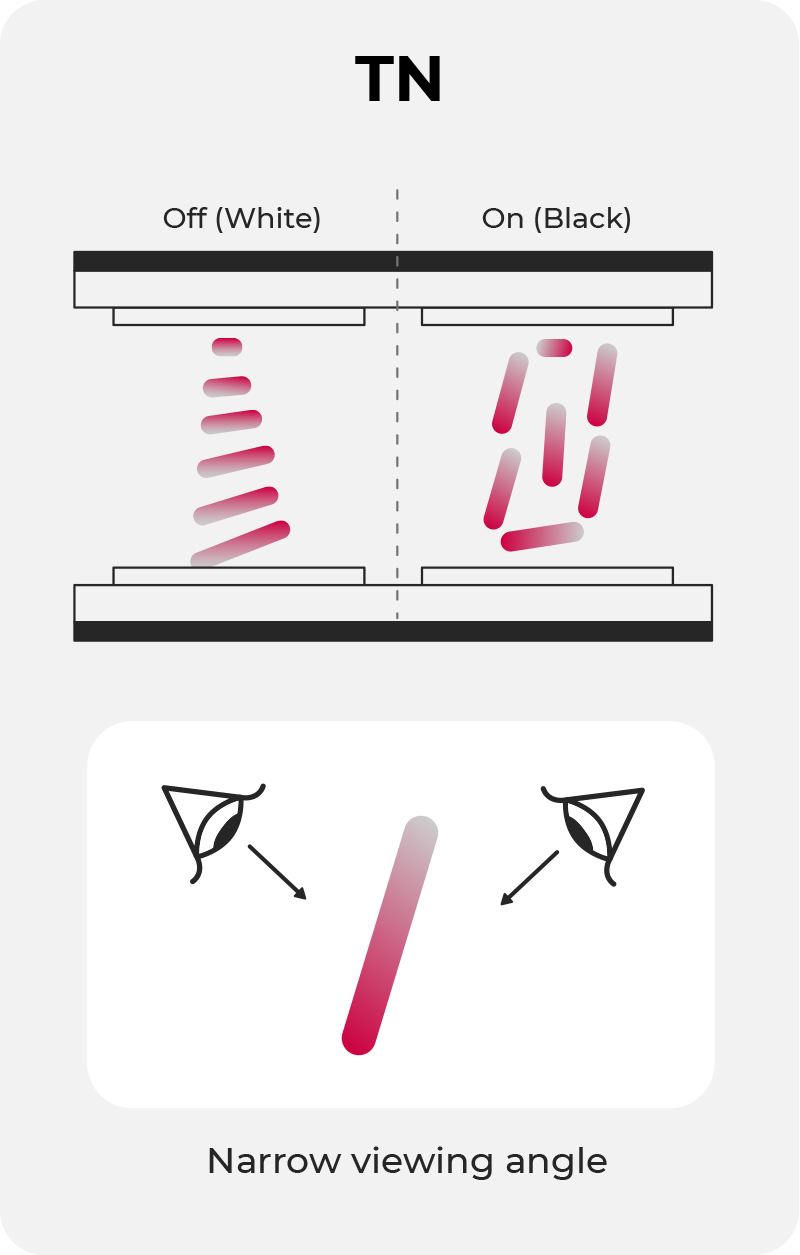
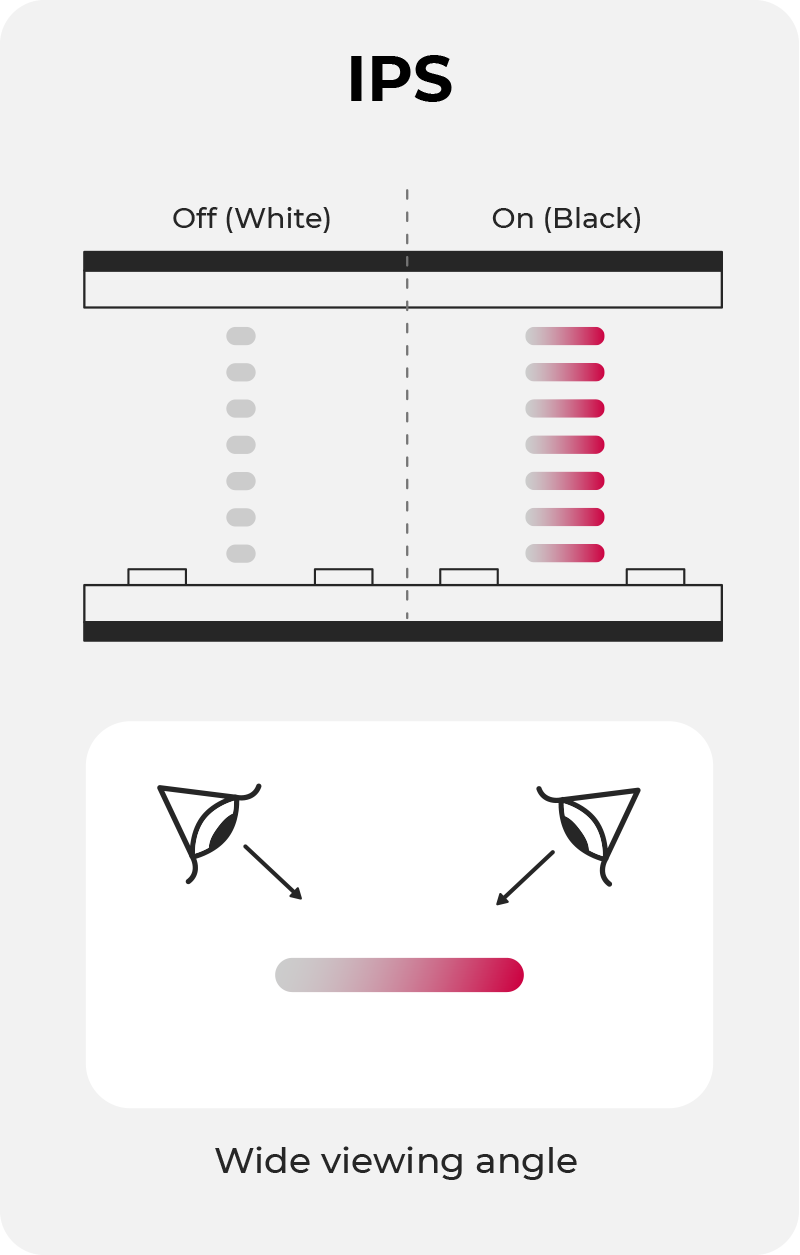
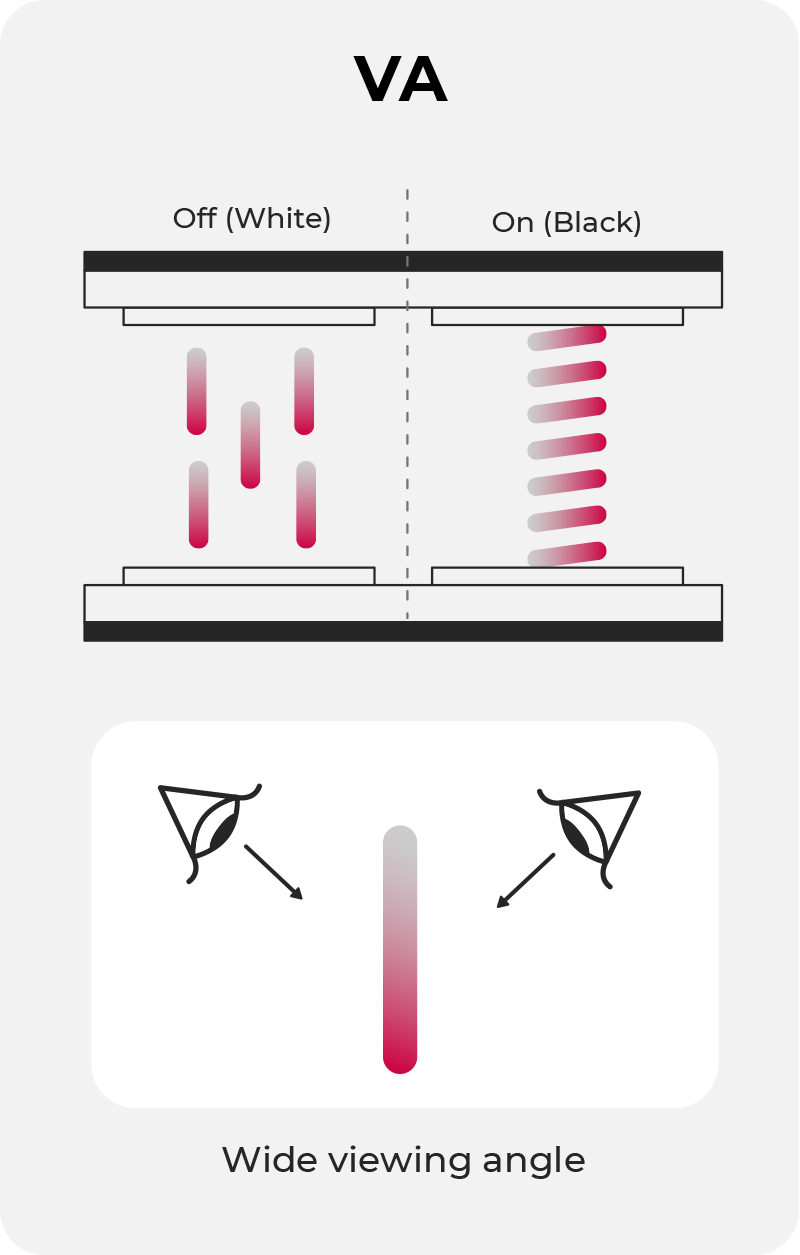
The differences amongst LCD technologies mainly stem from differences in liquid crystal materials and structures. Common LCD panel technologies are divided into TN (Twisted Nematic), IPS (In-Plane-Switching), and VA (Vertical Alignment).
TN, IPS, and VA panel technologies come with their own set of pros and cons
Note: This is a simplified schematic diagram of the panel structure, not an actual phenomenon
Since different types of panel technologies have their own liquid crystal structure, each has its own performance characteristics. Thus, each of these panels have different advantages and disadvantages.
TN
IPS
VA
Fast response
Win
Vivid color
Win
True black
Win
Viewing angle
Win
Win
Why A TN Panel?
Manufacturers generally use the response time as the performance index for dynamic image sharpness. However, there is no uniform response time measurement or numerical definition method in the industry, and each manufacturer use different standards to make claims in retrospect of their product’s response time. Therefore, any stated response time may differ in comparison to the perceived experience from a gamer's point of view.
A TN panel's fast response time comes from its special liquid crystal material characteristics, which provides a clearer and sharper dynamic image quality compared to other LCD panel technologies. The video below compares the XL2546K (240Hz) with an IPS 240Hz monitor. In the video, both monitors are set at the fastest setting to test the response time. Overall, you can see that the TN panel provides a faster performance in-game due to it's characteristics.
Fast-TN provides a clearer and less blurred image in situations where images are changing rapidly. This allows the position of the crosshair or a bullet’s impact point to be seen clearly. Agents in Valorant can easily spot enemy movement when they’re moving quickly. The following is a demonstration of Fast-TN’s different levels of motion clarity Valorant:
Explore Our Recommended Videos
Learn more on how to use our other special features such as customized color settings, XL Settings to Share, and more!
How to Use XL Settings to Share
How to Adjust Color Settings
How to Find Your Color Settings